
EAS & RFID Systems — Antitheft Devices for Retail in Riyadh
From the gates at the entrance to the tag on every item, CDIT supplies and supports the full antitheft system, not just individual pieces of hardware.

Regulatory Compliance
Licensed providers operate under rules set by the Ministry of Interior, keeping your installation aligned with Saudi security regulations rather than exposed to them.

Security Tags
AM/RF hard tags, pencil tags, and specialty tags for every merchandise type

Labels & Pins
AM/RF soft labels, tag pins, lanyards, and fastenings

Detachers
Magnetic and mechanical tag removers and label deactivators
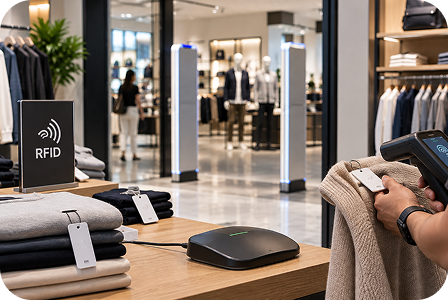
RFID Tags & Readers
Item-level tags and UHF readers for inventory-grade visibility

The detection gates at the entrance are the visible core of any EAS setup, and the part shoppers and would-be thieves notice first. CDIT supplies the full range of EAS antenna systems, matching detection performance to entrance width, store layout, and interior design — every antenna works with industry-standard tags, labels, and deactivators.
Pedestal / Free-Standing Antennas - The classic upright gates at the store entrance. Strong visual deterrence, reliable detection, and easy servicing, suited to fashion, electronics, pharmacy, and supermarket formats. Available in acrylic, ABS, and metal finishes in both AM and RF technologies.
Concealed / In-Floor Antennas - Detection hidden beneath the floor or within the doorway, leaving the entrance completely clear. The preferred choice for luxury boutiques, jewelry, and high-end fashion where an open, uncluttered entrance matters.
Overhead Antennas - Mounted above the entrance rather than on the floor, keeping the doorway and floor space free. Suited to busy entrances and wide doorways, and removes the risk of pedestals being knocked or moved.
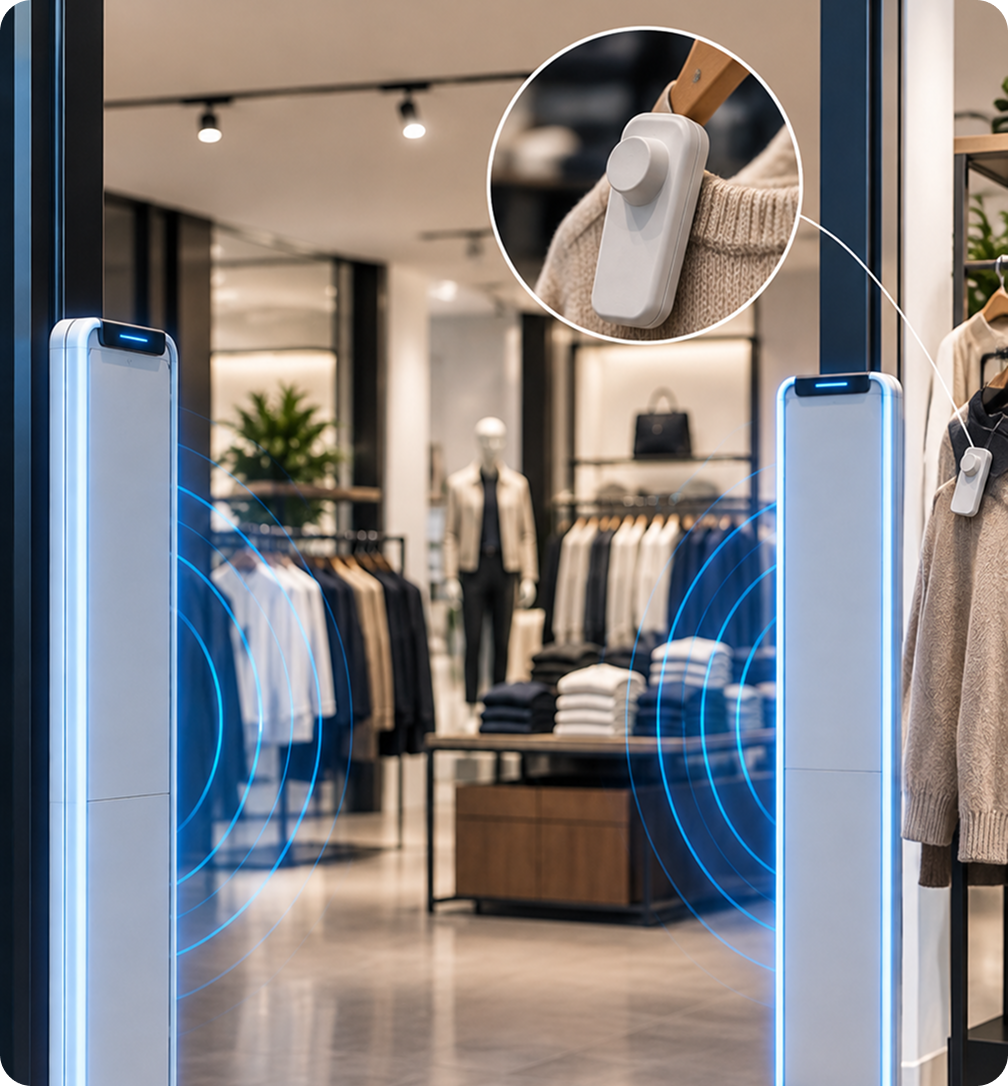
EAS systems run on one of two core technologies, and the right choice depends on the store's merchandise, layout, and environment.
RF (Radio Frequency) Systems - The most widely adopted EAS technology worldwide, typically operating between 2 MHz and 10 MHz, with 8.2 MHz the most common frequency. RF systems have the lowest power consumption and label cost of the major EAS technologies, with thin soft labels and hard tags resistant to magnet tampering—a cost-effective fit for fashion and general merchandise.
AM (Acousto-Magnetic) Systems - Operating between 58kHz and 66kHz, AM systems offer high detection accuracy with fewer false alarms and tend to perform well in humid conditions, making them well suited to wide exits and supermarket-format stores. AM consumes more power than RF but is more adaptable around metal merchandise.
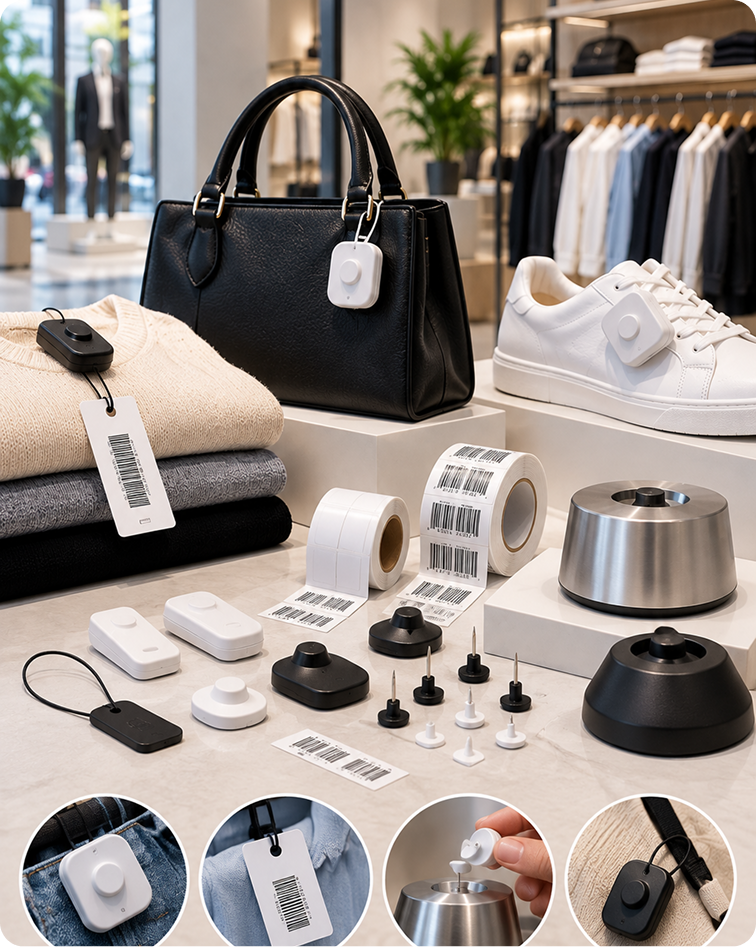
AM/RF Tags - Reusable hard tags for clothing, bags, and footwear, fastened with a pin and removed at the till with a detacher—the front-line visual deterrent that triggers the gate alarm if an item leaves unpaid. Includes pencil tags, shell tags, and specialty options.
AM Labels - Single-use acousto-magnetic soft labels for boxed goods, cosmetics, and packaging, deactivated at checkout so they pass the gate silently—a discreet, low-cost way to protect items that can't take a hard tag.
RF Labels - Thin 8.2MHz radio-frequency soft labels, including barcode-printed versions, suited to boxed goods, books, electronics, and cosmetics, switched off by a deactivator pad at the point of sale.
Pins - Security tag pins and nails fasten hard tags to merchandise, available in standard and specialty lengths, plus lanyards and cables for bottles, bags, and irregular items a straight pin can't secure.
Detachers - Magnetic and mechanical detachers release hard tags at the counter, from standard strength up to high-security options, paired with deactivator pads for soft labels to keep checkout fast and alarm-free.
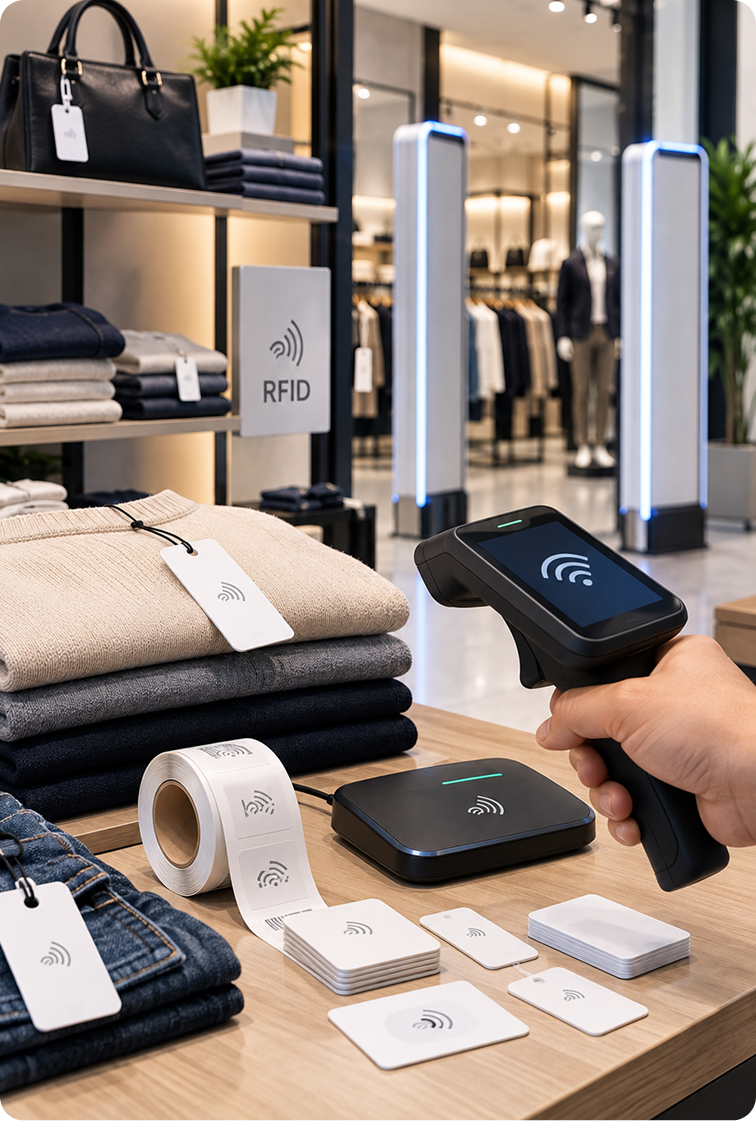
RFID goes beyond what EAS alone can do. Where AM and RF systems primarily detect whether a tagged item is leaving the store, RFID uses unique electronic tags that identify each individual product—every tag carries a chip and antenna storing a unique ID, letting a reader capture hundreds of items in seconds without line-of-sight scanning. RFID typically operates in the Ultra High Frequency (UHF) band, roughly 860–960 MHz, enabling longer read ranges and simultaneous multi-tag scanning — a single pass of a reader can capture an entire rack of garments or a full basket of goods.
RFID Labels & Stickers - Thin adhesive chip stickers for cartons, books, and general merchandise
Retail RFID Tags - Hand tags, pencil tags, and hard tags for real-time stock visibility on the shop floor
Fabric & Garment Tags - Soft woven tags sewn in for seamless apparel tracking
Dual EAS/RFID Tags - Track inventory and trigger antitheft gates from a single tag
Asset Tags - RFID tags on fixtures, displays, rolling racks, and in-store equipment for fast location and audit across the shop floor, stockroom, and between branches